Why Cozy Autumn Sleep Stories Work Better Than White Noise for Insomnia
Cozy autumn sleep stories engage the brain's default mode network through low-stakes, comforting imagery like baking warm apple pies or quiet moonlit orchards. By replacing unstructured racing thoughts with predictable, gentle narratives, these audio experiences reduce cortisol levels and signal to the nervous system that it is safe to transition into deep, restorative sleep.
Key Takeaways
- Cozy autumn bedtime narratives redirect an overactive mind away from daily stressors and toward low-stakes sensory details.
- Unlike static white noise, narrative pacing naturally mimics the slowing heart rate and breathing patterns required for sleep onset.
- The sensory imagery of autumn—such as the scent of cinnamon and warm apple pies—activates nostalgic comfort that lowers anxiety.
- Structured sleep stories prevent the phenomenon of auditory habituation often experienced with continuous drone sounds.
- Combining slow-paced narration with ambient woodland sounds creates an optimal auditory environment for maintaining deep sleep cycles.
The Psychology of Narrative Sleep Aids
When adults struggle with insomnia, the primary obstacle is rarely physical fatigue; rather, it is cognitive hyperarousal. Throughout the day, the brain accumulates micro-stressors, unresolved tasks, and anticipatory anxiety. When the lights go out, this mental clutter takes center stage, keeping the nervous system locked in a mild fight-or-flight response. Traditional sleep solutions like white noise machines provide a continuous auditory blanket, but they leave the executive functioning parts of the brain completely unoccupied. Without a point of focus, a restless mind will often use the static background sound as a canvas for looping thoughts and worries.
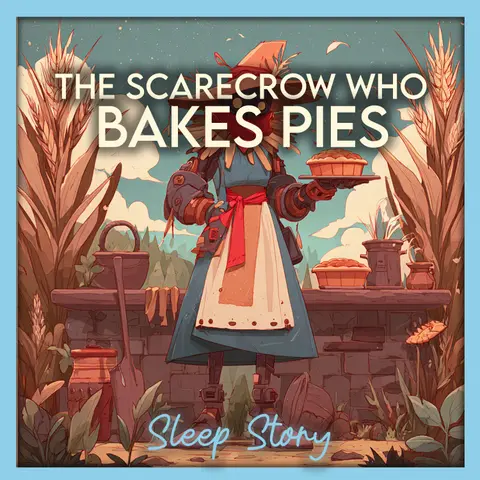
Cozy autumn sleep stories solve this problem by offering the brain a gentle anchor. A narrative featuring simple, comforting routines—such as a friendly scarecrow tending to a midnight kitchen or gathering ingredients for baking—requires just enough cognitive bandwidth to keep the logical mind from wandering into stress loops, yet it remains intensely mundane and predictable. There are no plot twists, high-stakes conflicts, or sudden dramatic shifts to trigger adrenaline. Instead, the story unfolds at a pedestrian pace, allowing the listener to passively observe a tranquil world where nothing urgent demands attention.
Cognitive Offloading Through Autumn Imagery
Autumn imagery holds a unique place in human psychology due to its strong cultural associations with harvest, completion, and physical shelter. When we listen to descriptions of moonlit orchards, glowing lanterns, and the comforting scent of honey and cinnamon, our brains undergo a process of cognitive offloading. We project our desire for sanctuary onto the scene. This mental migration away from the bedroom and into a cozy countryside cottage helps break the association between the bed and sleepless frustration, paving the way for natural melatonin production.
Narrative Pacing vs. White Noise: Which Is Better for Insomnia?
For decades, audiologists and sleep researchers have championed white noise, pink noise, and brown noise as the ultimate auditory sleep aids. These sounds work by masking sudden environmental noises—like a barking dog or a passing car—that might otherwise trigger micro-awakenings. However, pure noise lacks a temporal dimension. It has no beginning, middle, or deceleration. For chronic overthinkers, a static drone can eventually become background static that the brain learns to ignore, leaving the door wide open for intrusive thoughts.
Structured sleep stories introduce a deliberate pacing mechanism. The cadence of the narrator's voice, combined with subtle, low-frequency ambient sounds, encourages the listener to unconsciously synchronize their breathing. As the descriptions become more grounded and the events in the story slow down, the listener's physiological metrics—such as heart rate variability and blood pressure—tend to mirror that deceleration.
Avoiding Auditory Fatigue
Another drawback of continuous ambient noise is auditory fatigue. The unchanging frequency spectrum of white noise can sometimes cause mental strain if played for hours at high volumes. Narrative sleep stories, on the other hand, provide dynamic range. The natural rise and fall of vocal inflection, paired with soft environmental transitions, keeps the auditory cortex engaged just enough to block out disruptive thoughts without causing sensory overload.
How to Integrate Sleep Stories Into Your Nighttime Routine
Maximizing the benefits of a sleep story requires more than simply pressing play as you turn off the lights. To condition your brain to associate the audio with immediate relaxation, consistency and environment are key. Establishing a pre-sleep wind-down ritual helps prime the nervous system so that the moment the narration begins, your body recognizes the cue to let go.
- Dim all blue-light-emitting screens at least thirty minutes before getting into bed.
- Set your audio player's sleep timer so the story stops playing once you are safely drifting off, preventing mid-night jolts from unexpected sounds.
- Use comfortable, breathable bedding and supportive pillows to eliminate physical discomfort that might fight against mental relaxation.
- Keep the volume low enough that you have to actively listen slightly, which prevents your mind from drifting back to active problem-solving.
By shifting your nighttime routine away from digital stimulation and toward slow-paced, atmospheric storytelling, you create a reliable bridge from wakefulness to deep rest. Whether you prefer the charm of countryside kitchens or quiet autumn fields, leaning into gentle narratives can transform your relationship with bedtime.
Conclusion
Overcoming sleeplessness does not always require clinical intervention or complex sleep hygiene protocols. Often, it simply requires giving a tired mind permission to rest within a safe, imaginative space. If you are ready to experience the profound relaxation of a soothing autumn narrative firsthand, Listen to the full episode and let the gentle sounds guide you into a peaceful slumber tonight.
Frequently Asked Questions
Why do sleep stories work better than podcasts or audiobooks for insomnia?
Standard podcasts and audiobooks are designed to keep you mentally stimulated, featuring interviews, complex plots, or high-energy delivery that demands attention. Sleep stories use deliberately slow pacing, monotone delivery, and low-stakes plots designed specifically to let your attention fade without missing crucial information.
Can sleep stories help if I wake up in the middle of the night?
Yes. Listening to a calm, predictable narrative during a midnight awakening can prevent your brain from engaging in anxious problem-solving about being awake, helping you transition back to sleep much faster than lying in silence.
Do I need headphones to listen to a sleep story?
Headphones are optional. While over-ear headphones or sleep bands can enhance the immersive quality by blocking out external noise, playing the story softly on a bedside speaker is equally effective for most listeners.
How long does it typically take to fall asleep to a narrative sleep story?
Most listeners find they drift off within the first 15 to 25 minutes of a sleep story. Because the pacing is intentionally unhurried, the brain naturally winds down as the narrative progresses.