Why Coastal Ambient Sounds Help Quiet Racing Thoughts at Night
Racing thoughts can hijack your bedtime routine, keeping your nervous system on high alert long after the lights go out. By examining the psychology of auditory masking and coastal nature sounds, you will learn how specific acoustic frequencies—like slow-moving ocean waves and nighttime tide rhythms—help quiet an overactive mind and prepare your body for deep, restorative sleep.
Key Takeaways
- Auditory masking helps block out sudden household noises that trigger micro-awakenings.
- Low-frequency coastal soundscapes mimic safe natural environments, signaling the parasympathetic nervous system to relax.
- Imagining tactile coastal imagery, such as cool sand or drifting kelp, redirects mental energy away from daily stressors.
- Slow pacing and repetitive auditory patterns act as a cognitive anchor for drifting thoughts.
- Combining structured bedtime storytelling with ambient ocean soundscapes accelerates sleep onset for chronic insomniacs.
The Neurology of Racing Thoughts at Bedtime
When you finally climb into bed, the sudden drop in external sensory input often triggers a surge of internal commentary. This phenomenon, known as cognitive hyperactivity, occurs because your brain is attempting to process the backlog of unaddressed stressors from your day. Without external distractions, your default mode network (DMN)—the brain network responsible for mind-wandering and self-referential thought—takes over.
For adults dealing with chronic insomnia or elevated stress levels, breaking this loop requires more than just closing your eyes. It requires an intentional sensory distraction that occupies just enough cognitive bandwidth to keep the DMN from spiraling into anxiety, without being stimulating enough to keep you awake. This is where specialized auditory environments become clinically valuable therapeutic tools for sleep hygiene.
How Auditory Masking Calms the Amygdala
The amygdala, your brain's threat-detection center, remains partially vigilant even while you sleep. Sudden, unpredictable sounds—a car door slamming, a floorboard creaking, or a distant siren—cause micro-arousals, spiking your heart rate and cortisol levels without fully waking you up. Coastal soundscapes feature a continuous, broad-spectrum frequency profile that effectively raises your auditory threshold, masking these abrupt disruptions.
Unlike white noise, which can sometimes sound harsh or mechanical, natural ocean waves provide a rolling, predictable waveform. The rise and fall of the tide creates an innate rhythm that your brain can easily track and anticipate, effectively lulling the nervous system into a sense of environmental safety.
The Psychology of Coastal Imagery and Stress Relief
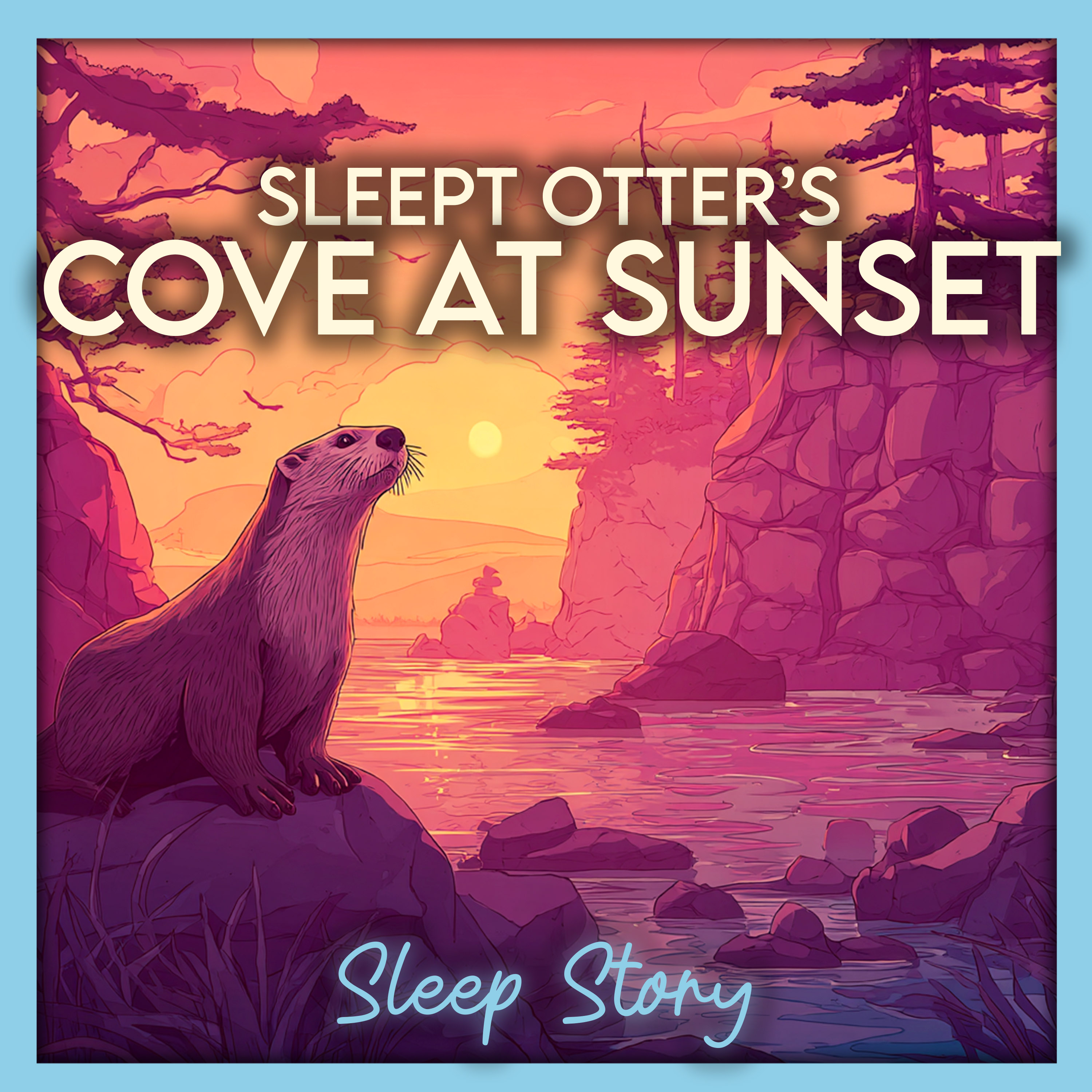
Beyond raw acoustic masking, narrative-driven auditory experiences leverage the power of passive visualization. When you listen to a descriptive story set in a tranquil coastal environment—such as a quiet otter's cove at dusk—your brain engages in mental simulation. You begin to picture the soft gradient of sunset over the water, the gentle sway of glowing moon jellies, and the rhythmic lapping of water against smooth shore stones.
This imaginative process shifts your neural activity away from analytical problem-solving and into sensory-based processing. Because the mental imagery of a calm cove is inherently non-threatening, it acts as a mental anchor. Whenever a stray work thought or anxious to-do list item intrudes, the sensory details of the story provide a gentle, effortless mechanism to redirect your focus back to stillness.
Why Non-Human Perspectives Promote Psychological Detachment
One understated benefit of listening to animal-centric sleep narratives is the complete absence of human-centric demands. Following a character like Luma the otter—whose primary concerns are resting, floating, and watching the tide—creates a psychological buffer between your waking identity and your sleep state. You aren't processing interpersonal conflicts or career deadlines; you are simply observing a small, peaceful creature settle in for the night.
This shift in perspective encourages ego-dissolution, a psychological state where the boundaries of the self soften. When you stop identifying as a stressed professional or busy parent and instead focus on the sensory experience of a quiet shoreline, your physical body responds by lowering its core temperature and slowing its respiratory rate.
Practical Steps to Optimize Your Sleep Audio Routine
Simply pressing play on a sleep story is helpful, but optimizing your bedroom environment can dramatically amplify its effectiveness. To get the most out of coastal sleep narratives, consider implementing these evidence-based adjustments to your bedtime setup:
- Control Light Exposure: Ensure your bedroom is completely dark to support natural melatonin production while you listen to the audio.
- Invest in Comfortable Sleep Headphones: If you sleep with a partner or live in a loud urban environment, low-profile sleep headband headphones prevent uncomfortable pressure points while keeping the sound close to your ears at a low volume.
- Set a Consistent Time: Train your circadian rhythm by starting your audio journey at the exact same time each night, signaling to your brain that the transition to sleep has begun.
Embracing Restful Nights Through Nature and Narrative
Overcoming insomnia and evening stress is rarely about forcing yourself to sleep; rather, it is about creating the optimal biological and psychological conditions for sleep to happen naturally. By combining the soothing acoustic profile of ocean tides with gentle, slow-paced storytelling, you can quiet racing thoughts, soothe an overactive nervous system, and reclaim your nights.
To experience these calming effects firsthand and let go of today's stress, Listen to the full episode and let the gentle sounds of the coastal cove guide you into a deep, peaceful slumber tonight.
Frequently Asked Questions
Why do ocean sounds help with insomnia?
Ocean sounds provide natural auditory masking that covers up sudden background noises, while their predictable, rolling rhythm helps slow your heart rate and calm your nervous system.
How do sleep stories stop racing thoughts?
Sleep stories engage your brain's visualization networks with low-stakes, calming imagery, preventing your mind from wandering back to daily stressors and anxiety-inducing thoughts.
Is it better to listen to sleep stories with headphones or speakers?
It depends on personal preference and your environment. If you live in a noisy area, comfortable sleep headphones deliver clear, immersive sound at a low, safe volume without disturbing anyone else.
Can nature-based sleep stories help with chronic anxiety?
While they are not a replacement for clinical treatment, immersive nature narratives help activate the parasympathetic nervous system, providing immediate relief from acute bedtime anxiety and physical tension.